Table of Contents
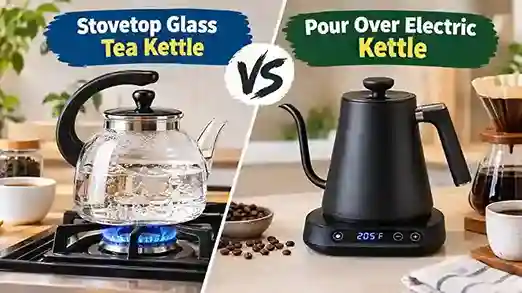
Stovetop Glass Tea Kettle vs Pour Over Electric Kettle Choosing the kettle can make a noticeable difference in your daily tea and coffee routine. Two popular options are the stovetop glass tea kettle and the pour over kettle. Although the stovetop glass tea kettle and the pour over kettle are designed to heat and pour water they offer very different experiences in terms of convenience, temperature control, brewing precision, design and energy use.
A stovetop glass tea kettle is an traditional option that lets you heat water directly on a compatible stovetop. Its transparent glass design can also make it easy to see the water level. Watch the heating process. On the hand a pour over electric kettle is designed for controlled pouring and often includes features such as temperature settings, automatic shutoff and a gooseneck spout.
If you are shopping for a kettle for tea pour over coffee or everyday hot water understanding these differences can help you choose the option.
What Is a Stovetop Glass Tea Kettle?
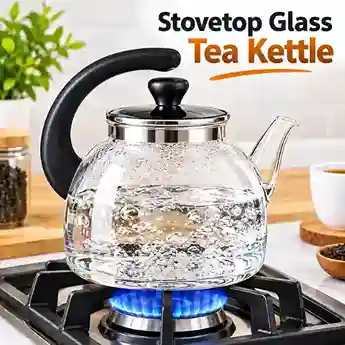
A stovetop glass tea kettle is a kettle made primarily from glass that is designed to heat water on a compatible stovetop. Depending on the model a stovetop glass tea kettle may be suitable for gas, electric or other cooking surfaces so buyers should always check the manufacturer’s compatibility information before purchasing.
The transparent body of the stovetop glass tea kettle is one of its recognizable features. You can see how much water is inside and monitor the heating process without opening the lid.
Many stovetop glass tea kettles also have a design with a handle, lid and pouring spout. Stovetop glass tea kettles generally do not require an outlet, which makes them useful in kitchens where simplicity is a priority.
One of the attractions of the stovetop glass tea kettle is its traditional brewing experience. You add water place the stovetop glass tea kettle on the stove heat it and pour when the water reaches the desired temperature.
However stovetop glass tea kettles generally require attention than electric models. You need to turn the stove on and off manually and monitor the heating process.
What Is a Pour Over Electric Kettle?
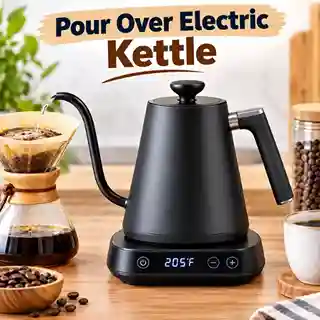
A pour over kettle is an electric kettle specifically designed for controlled pouring. Many models feature a gooseneck spout that allows users to direct water precisely.
The design of the pour over kettle is particularly useful for pour over coffee because the flow of water can affect how evenly coffee grounds are saturated.
Many electric pour over kettles also provide temperature control. Of simply heating water until it boils a pour over electric kettle may allow selection of a specific temperature depending on the model.
For tea enthusiasts the ability to set temperature can be useful because different teas are often brewed using temperature ranges. For coffee drinkers the ability to set temperature can also provide control over water temperature.
Another advantage is convenience. A user typically fills the pour over kettle selects the desired temperature and lets the kettle handle the heating process. Many models automatically shut off after reaching the selected temperature.
Stovetop Glass Tea Kettle vs Pour Over Electric Kettle: Main Differences
Although the stovetop glass tea kettle and the pour over electric kettle heat water their designs are aimed at different users.
A stovetop glass tea kettle emphasizes simplicity and visibility. A pour, over kettle emphasizes precision and convenience.
Here are the main differences:
| Feature | Stovetop Glass Tea Kettle | Pour Over Electric Kettle |
|---|
| Heating method | Stovetop | Electric |
| Temperature control | Usually manual | Often adjustable |
| Pouring precision | Moderate | High |
| Gooseneck spout | Usually no | Usually yes |
| Electricity required | No | Yes |
| Automatic shutoff | Usually no | Often available |
| Visibility | Excellent | Depends on design |
| Pour over coffee | Possible | Excellent |
| Traditional tea preparation | Excellent | Excellent |
| Portability | Useful where a stove is available | Requires electrical power |
Heating Speed
Heating speed can vary a deal based on the kettle the amount of water the stove and the electrical power.
A stovetop glass tea kettle relies on the heat that comes from the stove. A gas stove may heat in a way than an electric cooktop and the amount of water will also change how long it takes.
An electric kettle uses a heating element inside. Many new electric kettles are built to heat water quickly and efficiently.
For people who often need water in the morning rush an electric kettle can be convenient because a person can start heating and then do another task while the kettle heats.
A stovetop kettle needs direct attention because a person must watch the stove.
Temperature Control
Temperature control is one of the differences between these two kettle types.
With a stovetop glass tea kettle a person generally controls the temperature by judging the heating process. Some people wait until the water starts to boil while others use a thermometer for exact measurements.
A temperature‑controlled electric kettle can simplify this process. Depending on the model a person may choose a temperature before starting the heating cycle.
This feature can be especially helpful for tea drinkers who brew kinds of tea.
For example a person who often switches between tea, black tea, herbal tea and coffee may like the ability to choose different temperature settings.
If precise temperature control is important a pour over kettle is generally the more feature‑rich option.
Pouring Precision
Pouring performance is another consideration.
A stovetop glass tea kettle usually has a spout. The spout can work well for filling mugs, teapots or French presses. It may not give the level of control needed for precision coffee brewing.
Pour over kettles usually have a narrow spout often called a gooseneck spout. The narrow spout lets a person control the direction and speed of the water flow.
For pour over coffee this can make the brewing process more consistent.
The controlled stream lets a person wet areas of the coffee bed and keep a steady pouring technique.
If the main purpose is pour over coffee the spout design should be one of the first features a person considers.
Ease of Use
Both kettle types are fairly straightforward. They offer different kinds of convenience.
A stovetop glass tea kettle is simple. Fill the kettle with water place the kettle on the cooking surface heat the water and pour.
There are electronic controls to learn and fewer digital features to manage.
A pour over kettle may have buttons a display, temperature controls and other functions. Once a person understands the controls however the process can become very convenient.
For people who prefer an uncomplicated kitchen setup a stovetop glass kettle may be appealing.
For users who value automation and precise settings an electric kettle can be more convenient.
Design and Appearance
Glass kettles are often chosen because of their appearance.
The transparent body lets a person see the water inside. Some models can create an appealing visual experience as the water heats.
A glass kettle can fit well in kitchens that have a minimalist or modern design.
Pour over kettles often have a more specialized appearance. The gooseneck spouts and integrated bases are designed for controlled brewing.
If aesthetics are important consider the overall design, handle comfort, base construction and materials than choosing only based on appearance.
Capacity
Capacity is another factor.
If a person usually prepares one or two cups of tea or coffee a smaller kettle may be enough. If a person frequently serves people a larger‑capacity kettle may be needed.
A larger kettle can reduce the number of heating cycles needed. Heating a large volume of water can also take longer.
When comparing a stovetop glass tea kettle with a pour over kettle check the actual usable capacity instead of relying only on the product title.
Also remember that manufacturers may list the capacity while the recommended operating capacity can be lower.
Safety Features
Safety is a consideration, with any appliance that heats water.
A stovetop kettle requires attention because the kettle sits directly on a heat source. A person must make sure the kettle is placed correctly and that the stove is turned off after use.
Glass models also require handling. While heat‑resistant glass is designed for temperatures, sudden temperature changes or improper use.
This can create stress on the material.
I have found that electric kettles often include shutoff and boil-dry protection though features can differ from one model to another.
Automatic shutoff can be very helpful if you get distracted while making breakfast or coffee.
Always follow the manufacturers instructions, about how much water to use the surfaces that are safe how to clean and how to handle the kettle.
Cleaning and Maintenance
Cleaning needs depend a lot on the kettles design.
A glass stovetop kettle may be easy to check because mineral build‑up can be seen through its body.
But hard‑water deposits can build up inside the kettle over time and regular cleaning can keep the kettle looking good and working well.
Electric kettles can also gather mineral deposits in places with hard water.
When you shop look for features, like a lid, a wide opening, washable parts and interior surfaces that are easy to reach.
Do not assume that every part of a kettle can be put under water or washed straight away. Always follow the manufacturers cleaning instructions.
Energy Efficiency
Energy efficiency depends on factors, including the amount of water heated and the heat source.
One of the ways to reduce wasted energy is to heat only the amount of water you actually need.
If you are making one cup of coffee filling a kettle completely can unnecessarily increase heating time and energy consumption.
Electric kettles can be convenient for heating a quantity of water while stovetop kettles allow users to take advantage of an existing cooking setup.
The actual energy performance will vary from model to model so buyers interested in efficiency should review the specifications of the kettle.
Which Is Better for Tea?
For tea preparation both options can work well.
A stovetop glass tea kettle is particularly appealing if you enjoy a process and like watching the water heat.
A temperature-controlled electric kettle may be more suitable if you prepare types of tea and want greater control over water temperature.
Tea enthusiasts should also consider whether the kettle has a handle, easy-pour spout, sufficient capacity and a lid that is convenient to remove.
If precise temperature selection is one of your priorities an electric kettle may provide a convenient experience.
Which Is Better for Pour Over Coffee?
For pour over coffee the pour over kettle has a clear functional advantage because it is specifically designed around controlled pouring.
The gooseneck spout allows you to direct water precisely over the coffee grounds.
Temperature control can also help users repeat their brewing process more consistently.
A stovetop glass tea kettle can still heat water for coffee. Its conventional spout may make controlled pouring more difficult.
Therefore coffee enthusiasts who regularly use pour over brewing equipment should pay attention to spout design and temperature-control features.
Which One Is Better for Beginners?
Beginners may appreciate the simplicity of a stovetop glass tea kettle.
There are settings and no complicated electronic interface. It can be a way to learn how to heat and pour hot water.
However beginners interested in pour over coffee may find an electric gooseneck kettle easier to use because its design supports controlled pouring.
The better choice depends on what you’re trying to learn.
If you want tea preparation a simple stovetop kettle can be a good starting point. If you want to learn pour over coffee a temperature-controlled electric kettle may provide features from the beginning.
Pros and Cons of a Stovetop Glass Tea Kettle
Pros
- transparent design
- No electrical outlet required
- Simple operation
- Easy to monitor water level
- Works well for traditional tea preparation
- Can be used with compatible stovetops
- Often has a straightforward design
Cons
- Usually requires manual temperature control
- May require more attention while heating
- Conventional spouts may provide less pouring precision
- Glass requires careful handling
- Heating speed depends on the stove
- Pros and Cons of a Pour Over Electric Kettle
Pros
- Designed for controlled pouring
- Gooseneck spout is useful for pour over coffee
- Many models offer temperature control
- Often includes automatic shutoff
- Convenient for repeatable brewing
- Easy to use once settings are understood
Cons
- Requires electricity
- Usually costs more than a basic kettle
- Electronic components can add complexity
- Not every model offers the same temperature accuracy
- Some designs have smaller capacities
What Should You Look for Before Buying?
Before purchasing either kettle consider how you normally prepare hot beverages.
First check capacity. Choose a size that matches the number of cups you usually prepare.
Second consider temperature control. If you drink types of tea or make pour over coffee adjustable temperature settings may be valuable.
Third inspect the spout design. A narrow gooseneck spout is useful for controlled coffee brewing.
Fourth consider handle comfort. A kettle can become uncomfortable if the handle is poorly positioned or difficult to grip.
Fifth check material quality. For glass kettles look for heat- glass and follow the manufacturers handling instructions.
Finally consider safety features, such as shutoff and boil-dry protection, on electric models.
Final Verdict: Stovetop Glass Tea Kettle vs Pour Over Electric Kettle
The choice between a stovetop glass tea kettle and a pour over kettle ultimately depends on your brewing style.
A stovetop glass tea kettle is a fit for people who appreciate traditional preparation, simple operation and a transparent design. It can be especially attractive for tea drinkers who want a kettle without electronic controls.
A pour over kettle is more focused on precision and convenience. Temperature controls, automatic features and a gooseneck spout can make it particularly useful for pour over coffee and users who want control over their brewing process.
Before buying think about what you prepare often how much water you need, whether temperature control matters to you and how important pouring precision is.
If your priority is stovetop tea preparation a glass kettle may be the right type to explore. If your priority is pour over coffee brewing and temperature control, an electric pour over kettle may better match your routine.
Whichever option you choose focus on the specifications safety features, capacity, materials and user requirements of the individual model. These details can make a difference to your experience, than the kettle category alone.