
Table of Contents
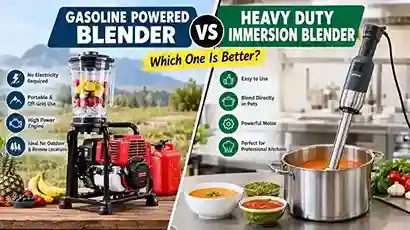
Gasoline Powered Blender vs Heavy Duty Immersion Blender Of the unusual contenders for a blender powerful enough to handle just about any kind of kitchen task, gasoline powered blenders and heavy duty immersion (stick) blenders are two really serious ones that can stand out. Though similar in that they can both do tough blending jobs, the two are very different.
Gasoline powered blender generally refers to portable, outdoor, high power petrol powered blender used in a place where somehow electricity is not available. In contrast, a commercial immersion blender is used in professional kitchens, restaurants and catering operations as well as by home cooks requiring serious blending right inside large pots/containers or food-processing vessels.
This comparison guide will provide you with a side-by-side analysis of gasoline blender vs immersion blenders (heavy duty) in terms of power, portability, convenience, performance, maintenance, noise levels and fuel requirements. Hopefully by the end you will have a much clearer idea if this is one type of blender that would suit your needs.
What is Gasoline Powered Blender?
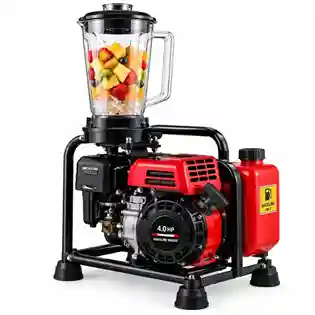
A better description would be a blending machine powered by a small gasoline engine instead of an electric motor which are common in most blenders. This type of blender is designed to work in areas and places where it may be hard to find access to electricity, or there is none.
Except instead of plugging the blender into a wall outlet, an engine uses gasoline to produce mechanical power. This could be helpful for outdoor events, remote locations, campsites, mobile food operations and emergencies where electrical power is not readily accessible.
Gasoline powered equipment can generate a lot of power but with it comes trade offs. These include fuel store, ventilation, engine maintenance, exhaust and noise.
If you need a blender that will work entirely remote from the electrical outlet, a gasoline engine can help, and it will give you are an alternative solutions.
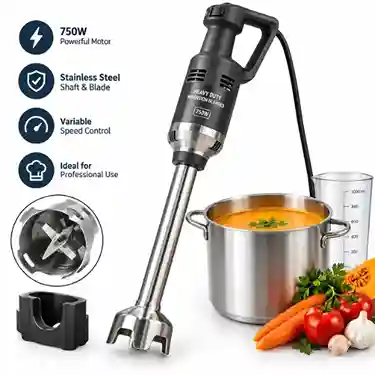
A heavy duty immersion blender is designed specifically for commercial use, unlike a standard immersion blender.
A hand blender is indeed a heavy-duty immersion blender, which the industry terms stick or hand size blenders, to indicate their length and orientation with a blade mounted on an end of the mixing rod.
Whereas a conventional countertop blender combines the ingredients in a separate vessel, an immersion blender is inserted directly into the pot, bucket, bowl or container that contains the food. This allows makes it especially handy when preparing soups, sauces, purees, gravies smoothies and more liquid or semi-liquid type foods.
Heavy duty models almost always have higher output motors, stainless-steel shafts and handles that are usually contoured for better gripping–they may also contain commercial-grade parts. They offer models suited to long-term use in restaurants and food-service applications.
One major advantage is convenience. Instead of ladling hot soup or sauce into a blender jar you stick the immersion blender right in the pot and blend it all up in place.
Gasoline Powered Blender vs Heavy Duty Immersion Blender
The primary distinction between these two appliances is their power source and use case.
A gas-powered blender concentrates on unconnectedness from power, whereas a hefty immersion mixer targets specialist food process and comfort.
To compare the most important parameters.
Power and Performance
Private: Blender Power is one of the most important considerations when choosing a blender.
Gasoline powered blenders are based on an internal combustion engine capable of producing large mechanical power. That can make it ideal for rugged outdoor or mobile applications. But real-world blending performance is contingent on the engine, blade design, container size, transmission system, and foods being blended.
Electric propulsion motors for heavy duty immersion blenders. The commercial models are hand-fed (and surprisingly powerful), specifically for high volume food processing.
An immersion blender may provide exceptional control for kitchen applications, as the blade is inserted directly into the ingredients.
Best in category: Heavy duty immersion blender for kitchen food prep
Some of the winners: For off-grid operation – Gasoline powered blender
Portability
Another plus for gas is portability, more easily taken to remote areas.
Gasoline powered Blender does not require electric outlets, hence the possibility of use could arise at outdoor events, remote locations, food stalls, campsites, farms and potential emergency situations.
Yet, gasoline-powered equipment is not the lightest option. The engine, the fuel system and more all add quite a lot of weight.
The design of an immersion blender is much easier to carry. Still, it needs to have electricity available unless you pair with the compatible power station or generator.
Gasoline powered blender: winner for not needing be plugged in
Image: Heavy duty immersion blender — Best for portable compact kitchen
Ease of Use
They are also very easy to use compared to other types of blending devices, which makes supreme heavy duty immersion blenders generally the most desirable.
Just plug the unit in, lower the blending shaft into your ingredients and turn on the motor. There is no gasoline to put in, no oil to warm up and no fuel system to look after.
You may have to do a bit more prep with gasoline powered blenders. You might be required to examine gas levels, start the vehicle, function it in a properly ventilated area and perform everyday engine maintenance.
An immersion blender is thus far more practical for everyday food prep.
Winner: Heavy duty immersion blender
Noise Level
Noise can be a major concern.
Since gasoline engines burn fuel and have moving parts, they’re naturally loud. This may render gas powered equipment poorly suited for noiseless settings.
Heavy duty immersion blenders are quite noisy, especially the commercial models which noise when you run it at high speed. But the sound profile produced by their electric motors is typically much less than that of a gasoline engine.
In a home kitchen, restaurant or catering environment working inside, lower noise makes all the difference.
Winner: Heavy duty immersion blender
Maintenance
Maintenance is another important difference.
So a gasoline powered blender has an engine and therefore fuel-system maintenance, oil changes, spark plug checks, air-filter policing (whatever that is), and other engine-related servicing.
We have less moving parts to clean up with the heavy duty immersion blender. The primary concern involves the motor, blade assembly, shaft, seals and electrical cable.
Even when used with large batches of food, professional immersion blenders should still be cleaned and examined regularly.
Winner: Heavy duty immersion blender
Safety
Safety must always come first when selecting powered equipment.
Gasoline operated devices emit fumes; only use these outdoor in well-ventilated areas based on the manufacturers recommendations. Gasoline is flammable, so precautions must be made in its handling and storage.
While immersion blenders do not emit any exhaust from an engine, they still have rotating blades and electrical circuitry. Users must adhere to the instruction link supplied by the manufacturer at and unplug before cleaning, servicing.
An electric immersion blender is then intended for kitchen application, however still in a home setting indoors.
Indoor Kitchen Use Winner: Heavy Duty Immersion Blender
Fuel and Operating Costs
Gasoline powered equipment requires fuel. Based on how often you use the blend, it can figure out an amount for fuel cost
Electric immersion blender running at the cost of electricity and generally has less requirement for ongoing consumables. It is more economical and easier to use, especially when you use the kitchen often.
But running any device is a function of its motor or engine efficiency, hours in use, power rating and local utility prices (for electricity) or fuel cost.
Best immersion blender for everyday kitchen needs: Immersion blender
Best Uses
The optimal decision, in the end, comes down to where you want to utilize the appliance and how.
Gasoline Powered Blender Applications
An example of a scenario where having a gasoline powered blender would be advantageous:
- Outdoor food preparation
- Remote locations
- Camping and field operations
- Mobile food businesses
- Areas with unreliable electricity
- Emergency situations
- Large outdoor events
- Off-grid applications
The greatest benefit it holds helps you stay off a typical outlet.
Heavy Duty Immersion Blender Applications
There are particularly useful things that heavy duty immersion blender can help you with:
- Restaurants
- Professional kitchens
- Catering businesses
- Soup preparation
- Sauces and gravies
- Vegetable purees
- Large batches of food
- Smoothies and liquid mixtures
- Baby food
- Commercial food preparation
- One of the best things about it is that you can blend right inside a pot.
Pros and Cons of a Gasoline Powered Blender
Pros
- Does not require a standard electrical outlet
- Suitable for outdoor applications
- Can provide substantial mechanical power
- Useful for remote locations
- This will be handy for mobile or off-grid use
- Useful in case of a blackout
Cons
- Requires gasoline
- Produces exhaust
- Can be very noisy
- Requires engine maintenance
- Not ideal for indoor use
- Fuel storage is necessary
- Potentially heaver than that of electric counterparts
Pros and Cons of a Heavy Duty Immersion Blender
Pros
- Easy to operate
- Excellent for professional kitchens
- Blend right into the pots or containers
- Stowable, compared with big commercial kitchen gear.
- No gasoline required
- Generally easier to maintain
- When used correctly, violent and tender for hot soups and sauces
- Available with powerful commercial-grade motors
Cons
- Requires electricity
- Could get tedious quickly for long-fingered manual work
- Not perfect for extremely tough ingredients
- Blade must be handled carefully
- Corded models have limited mobility
Which One Should You Buy?
So the answer is — that would really depend on your requirements.
A heavy duty immersion blender is generally best for anyone who runs a restaurant, commercial kitchen, catering business, or home kitchen. It delivers excellent blending capability without the hassle of an internal combustion engine.
If the overriding concern is functioning in the absence of electrical power, a gas blender may be a better fit. It can be used where connecting to an electric outlet is either too impractical.
Instead of gasoline-powered equipment, buyers must take special caution with ventilation, fuel handling, noise, maintenance and the intended use by the manufacturer beforehand.
Gasoline Powered Blender vs Heavy Duty Immersion Blender: Quick Comparison
| Feature | Gasoline Powered Blender | Heavy Duty Immersion Blender |
|---|
| Power source | Gasoline engine | Electric motor |
| Electricity required | No | Yes |
| Fuel required | Yes | No |
| Indoor use | Generally unsuitable | Suitable when used correctly |
| Noise | High | Moderate |
| Maintenance | Higher | Lower |
| Portability | Good for off-grid use | Excellent around kitchens |
| Outdoor use | Excellent | Limited by electricity |
| Professional kitchen use | Less practical | Excellent |
| Hot soup blending | Depends on design | Excellent |
| Remote locations | Excellent | Limited |
| Ease of operation | More complex | Very easy |
| Operating convenience | Lower | Higher |
What to Look for Before Buying
With the decision on which type is correct for you having been made, several things to consider.
What to Consider a Gasoline Powered BlenderQuality of engineFuel efficiencyMaterial of bladesVolume of containerSafety operation guidelinesVentilation requirementsNoise levelReplacement parts availability
In summary, always check for the power of motor (wattage), shaft length, stainless-steel body, quality of blade, speed control features if required, ergonomics design, cleaning requirement and its ability to run constantly.
When you use an immersion blender for a commercial application, make sure that your selection is designed to handle professional or industrial use and not just a normal household stick blender.
Gasoline Powered Blender vs Immersion Blender
Not necessarily.
The appliances themselves are intended to perform something different. If you simply compared them on power, you wouldn’t be anywhere nearly done.
When freedom from the grid is your main concern, a gas powered blender would be a valuable addition. For cases where easier, safer and more efficient food preparation is paramount, a good quality immersion blender is indispensable.
An immersion blender will, for the most part be the more useful option for most home cooks and professional kitchens. Sometimes this is the biggest advantage that gasoline-powered equipment has over a standard electric appliance in remote or off-grid applications.
Final Verdict
Blender vs heavy duty immersion blender is a battle with no clear winner.
If you are looking for a blending solution where conventional electricity is not readily available, be it outdoor, remote, mobile or off-grid environment – go with the gasoline powered blender instead. Its powered onboard engine can be useful independence but do remember the fuel, noise, exhaust and maintainance to make it comfortable.
Heavy duty immersion blender: The best choice for soups, sauces, puraes, restaurants, catering and everyday kitchen equipment. The compact design is easy to operate, and the use of this mixing device for food preparation often allows it to work directly in cooking containers.
An immersion blender for heavy duty work will be the overall better option for many kitchen users, as it is more user-friendly, easier to clean up afterwards, makes less noise and is especially suited for indoor food prep. In the main two things regarding signals are convenience and entirely away from electrical capacity, with a gas fueled blender.
Before purchasing, always check the manufacturer’s specs, how a tool is intended to be used, safety requirements, warranty and replacement parts along with ratings from actual users. Selecting the appropriate blender that is based on your real life setting and workload provides superior efficiency and years of good value.