
Table of Contents
Choosing the kitchen grinder can make a real difference in how you prepare and season food. Two common options are salt grinders and spice grinders. Even though they may look alike these tools are built for ingredients and tasks.
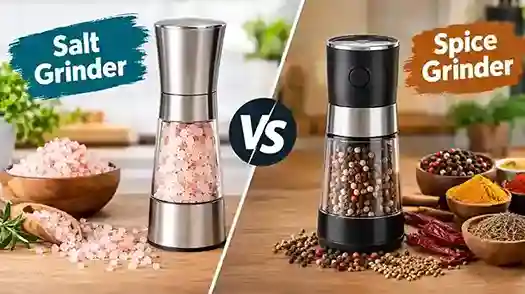
If you are trying to decide between a salt grinder and a spice grinder knowing their differences can help you pick the tool for your kitchen. A salt grinder is mostly made to break down salt crystals into pieces. A spice grinder on the hand is built to handle a wider range of dry spices and seeds.
In this guide we will compare salt grinders and spice grinders based on their purpose how they grind, how versatile they are, how easy they are to use how easy they are to clean how long they last and their overall value.
What Is a Salt Grinder?
A salt grinder is a kitchen tool made specifically to grind salt crystals. Of using pre-ground salt you can put bigger salt crystals inside the grinder and crush them as needed.
Freshly ground salt gives you control over seasoning. You can tweak the amount and texture depending on what you’re making. Most salt grinders are small and fit nicely on a dining table or kitchen counter.
Salt grinders come in two types: manual and electric. Manual models usually work by twisting or turning the top. Electric models have a motor that runs when you press a button.
One key thing to keep in mind is the grinding mechanism. Salt can be corrosive especially if moisture gets involved. So a grinder meant for salt should be made from materials that resist damage.
What Is a Spice Grinder?
A spice grinder is a kitchen appliance used to turn spices and similar ingredients into fine particles or powder. Depending on the model it can handle things like cumin seeds, coriander seeds, peppercorns, cloves, cardamom, dried chilies and more.
Many spice grinders use an electric motor with spinning blades. Others rely on burr-style systems or manual grinding methods.
The biggest benefit of a spice grinder is its versatility. It’s not just for one type of ingredient. It can often process different kinds of dry spices.
For people who cook curries, sauces, marinades, baked goods or spice mixes a spice grinder can be a useful addition.
Salt Grinder vs Spice Grinder: Main Difference
The main difference, between these two tools comes down to their purpose.
A salt grinder is built to work best with salt crystals. A spice grinder is designed to handle a variety of dry spices and other suitable ingredients.
| Feature | Salt Grinder | Spice Grinder |
|---|
| Primary purpose | Grinding salt | Grinding dry spices |
| Typical ingredients | Sea salt, rock salt, coarse salt | Cumin, coriander, peppercorns, dried chilies, etc. |
| Versatility | Usually limited | Generally higher |
| Grinding control | Often adjustable | Depends on model |
| Common design | Manual or electric | Manual or electric |
| Best for | Seasoning food | Preparing spice powders and blends |
| Cleaning | Usually simple | Depends on ingredients |
| Moisture resistance | Important | Usually less important |
While these differences appear simple the best choice depends on how you cook and which ingredients you use often. I have tried both. I understand the difference.
Grinding Performance
Grinding performance is one of the important factors to consider.
A good salt grinder should consistently break down salt crystals without excessive effort. Some models allow adjustment of the grind size making it possible to produce relatively coarse salt.
Spice grinders have a challenge. Spices vary greatly in size, hardness and texture. Cumin seeds, coriander seeds, peppercorns and dried chilies all require amounts of grinding.
An effective spice grinder should be capable of producing a consistent texture without overheating the ingredients.
For seasoning a salt grinder can be more convenient. For processing dry ingredients a dedicated spice grinder may offer greater flexibility.
Versatility
When comparing salt grinder versus spice grinder versatility is another difference.
A salt grinder is usually designed around salt. Some products may be marketed as multipurpose grinders. You should always check the manufacturers recommendations before putting other ingredients inside.
A spice grinder generally offers versatility. Depending on the design a spice grinder can handle dry ingredients and may allow you to create homemade spice blends.
For example you might use a spice grinder to prepare a mixture of cumin, coriander, black pepper and dried chili. This can be useful when cooking recipes that require freshly ground spices.
If your primary requirement is table seasoning, a salt shaker may be enough. If you frequently experiment with spices a spice grinder may provide more value.

Flavor and Freshness
Fresh grinding can improve the aroma and flavor of ingredients.
Whole spices generally retain their aroma better than pre‑ground spices because grinding increases the surface area exposed to air. Once spices are ground volatile aromatic compounds can gradually dissipate.
This makes a spice grinder particularly useful for people who prefer prepared spice powders.
Salt is different. Grinding salt primarily changes particle size. Makes it easier to distribute evenly across food. The flavor of salt itself does not necessarily become dramatically different simply because it has been freshly ground.
However grinding coarse salt can provide better control over seasoning and texture.
Ease of Use
A salt grinder is often extremely simple to operate. Manual models typically require a twisting motion while electric salt grinder can work with the press of a button.
This simplicity makes salt grinders convenient for meals. You can place one on the dining table. Grind salt directly over your food.
Spice grinders can also be easy to use, electric spice grinder models. You place dry spices into the grinding container secure the lid and activate the motor.
However preparing spices can involve a few additional steps. You may need to measure the ingredients grind them in batches and transfer the spice powder into a container.
Manual vs Electric Grinders
Both salt grinders and spice grinders are available in electric designs.
Manual Salt Grinders
Manual salt grinders are usually compact. Do not require batteries or electricity. They are an option for people who prefer a traditional kitchen tool.
Their main disadvantage is that grinding requires effort especially if you are using the grinder frequently.
Electric Salt Grinders
Electric salt grinders are convenient because they require minimal effort. Some models operate with a button and may include adjustable grinding settings.
They can be especially useful for people who want seasoning while cooking or eating.
Manual Spice Grinders
Manual spice grinders can provide control and do not require electricity. However they may require effort, than electric spice grinders.
Electric Spice Grinders
Electric spice grinders are popular because they can process ingredients quickly. They are particularly useful when preparing quantities of spices.

Cleaning and Maintenance
Cleaning is another factor that I think should never be overlooked.
Salt grinders can be relatively easy to maintain. Moisture should be avoided. Salt attracts moisture and over time this moisture can cause problems for metal components.
A spice grinder requires cleaning because strong spices can leave behind aromas and oils. If you grind dried chilies, cumin or cloves the flavors of those spices can remain trapped inside the grinder.
For this reason some users prefer to have a spice grinder rather than using the same appliance for coffee, nuts, salt or other ingredients.
Always follow the manufacturers cleaning instructions. If the grinding chamber is removable cleaning can become considerably easier.
Durability
Durability depends heavily on the quality of construction.
For salt grinders the grinding mechanism should be designed to handle salt crystals without wear. Materials that resist corrosion and moisture are particularly important.
For spice grinders the motor, blades, grinding chamber and housing all contribute to durability.
A cheaper grinder may work well for use while a more robust model may be more suitable for people who grind ingredients frequently.
When shopping online pay attention to construction materials, warranty information, customer reviews and the manufacturers recommended uses.
Which Grinder Is Better for Cooking?
There is no answer because the two grinders serve different purposes.
If your main goal is to grind salt for cooking or table seasoning a salt grinder is a practical choice. It is straightforward, convenient and designed around that task.
If you want to grind types of dry spices and prepare homemade spice blends a spice grinder may be more suitable.
The right choice ultimately depends on your cooking habits.
Can You Use a Spice Grinder for Salt?
Some spice grinders may be capable of grinding salt. This depends on the manufacturers instructions and the grinders construction.
Salt can interact with materials and may contribute to corrosion especially if moisture is involved. Therefore you should not automatically assume that every spice grinder is suitable for salt.
If you want to use one appliance for ingredients check the product specifications carefully before purchasing.
Can You Use a Salt Grinder for Spices?
Generally you should be cautious about using a salt- grinder for spices.
A salt grinder may have a grinding mechanism designed for salt crystals rather than harder or differently shaped spices. Using ingredients could result in poor performance or premature wear.
If you regularly grind spices purchasing a spice grinder is usually a more straightforward approach.
Price and Value
Price is another consideration when comparing a salt grinder and spice grinder.
Simple manual salt grinders can be relatively affordable while premium models may feature designs, adjustable settings and durable materials.
Spice grinders have a price range because they can include different motor strengths, blade designs, capacities and additional features.
Of choosing solely based on price consider how frequently you will use the grinder. A basic grinder may be perfectly adequate for cooking while frequent users may benefit from investing in a more durable model.
What to Look for Before Buying
Before purchasing either type of grinder consider the following features:
- Grinding Adjustment – grinding settings allow you to choose between fine and coarse textures. This can be particularly useful for salt and some spices.
- Grinding Mechanism – Check whether the grinder uses blades, burrs or another mechanism. The design should be appropriate for the ingredients you plan to grind.
- Capacity – A smaller grinder may be convenient for table use while a larger spice grinder can be more practical for preparing batches.
- Material – Look for materials that are appropriate for the ingredients being processed.
- Cleaning – A removable grinding chamber can make maintenance easier.
- Power Source – Electric grinders offer convenience while manual grinders avoid batteries and electrical components.
- Manufacturer Recommendations – Always check what ingredients the manufacturer specifically says the product can handle.
Salt Grinder vs Spice Grinder: Final Comparison
The salt grinder vs spice grinder comparison is ultimately about specialization versus versatility.
A salt grinder is a tool for grinding salt crystals and controlling seasoning texture. It can be particularly convenient, for people who enjoy freshly ground salt at the table or while cooking.
A spice grinder is usually more versatile. It is made to break down dry spices. Many cooks find it handy for making spice powders and their own blends.
If you mostly season food with salt a salt grinder may be all you need. If you often use spices a spice grinder can give you more options.
Many cooking lovers find it useful to own both. Each appliance can stay dedicated to its ingredients. This also stops flavors from moving between foods.
Choosing between a salt grinder and a spice grinder depends on what you want to grind and how often you cook. Salt grinders are handy for turning salt into a texture you can control. Spice grinders give you flexibility for grinding dry spices and making homemade blends.
Before buying look at the grinders mechanism, material, capacity, cleaning needs grinding settings and the ingredients it is meant for. Reading product details and customer reviews can also show you how a model works in use.
Whether you pick a salt grinder, a versatile spice grinder or both the right tool can make seasoning and spice preparation easier and more convenient, in your kitchen.

1 Comment
[…] Levoit Vital 100S vs Winix AM80: Pros and Cons […]