

Table of Contents
Choosing the kitchen tool can make everyday food preparation faster, easier and more enjoyable. If you are comparing a hand held rotary cheese grater and a Scraper Mixer Pro you may be looking at two different tools designed for different kitchen tasks. One focuses mainly on grating and shredding ingredients while the other is intended to provide food-preparation or mixing functionality.
For home cooks busy families, food enthusiasts and anyone building a kitchen setup understanding the differences before buying is important. A tool that works perfectly for cheese may not be the choice for mixing or scraping while a versatile mixer may offer functions that you do not actually need.
In this guide we will compare the Hand Held Rotary Cheese Grater and Scraper Mixer Pro based on design, functionality, ease of use, cleaning, storage, versatility, safety and overall kitchen convenience. The goal is to help you understand which type of appliance or utensil may better match your cooking routine.
What Is a Hand Held Rotary Cheese Grater?
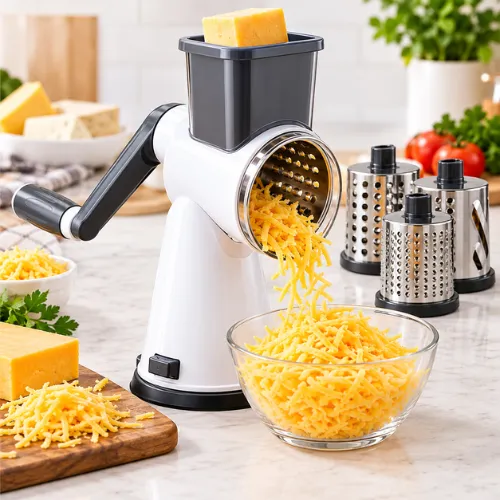
A hand held rotary cheese grater is a kitchen tool designed primarily for shredding or grating foods. Unlike a flat box grater a rotary model generally uses a rotating drum or grating cylinder. The user places the ingredient into the grating area. Turns a handle to rotate the cutting surface.
This design can make grating cheese convenient because the users fingers can remain away from the cutting drum during operation. Depending on the drum or blade design some rotary graters can also be used for vegetables, chocolate, nuts or other suitable foods.
The main attraction is simplicity. Of plugging in a large appliance you can take the grater out of a drawer secure the ingredient rotate the handle and produce freshly grated food.
For people who frequently prepare pasta, pizza, salads, casseroles, tacos or other meals that require ingredients a hand held rotary cheese grater can be a useful addition to the kitchen.
What Is a Scraper Mixer Pro?
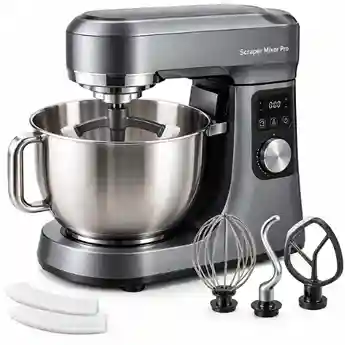
The term Scraper Mixer Pro generally suggests a mixer-style kitchen appliance or tool designed around mixing and scraping functions. A mixer can be useful for combining ingredients preparing dough or batter blending mixtures and performing food-preparation tasks depending on its exact design and attachments.
A scraper-style mixing system can be particularly useful because the scraper helps move ingredients from the sides of a bowl toward the center. This can improve ingredient incorporation during mixing.
Unlike a cheese grater a mixer is not primarily designed to shred cheese. Its strength is food preparation and mixing.
Because products using names such, as “Scraper Mixer Pro” can differ by manufacturer and model buyers should check the product specifications, attachments, motor power, capacity and intended uses before purchasing.
Hand Held Rotary Cheese Grater vs Scraper Mixer Pro: Main Difference
The biggest difference is purpose.
A hand held rotary cheese grater is a tool. Its main job is to grate or shred ingredients efficiently. It is usually compact, manually operated and easy to store.
A Scraper Mixer Pro is designed around mixing and food preparation. It may be better suited to recipes that involve combining ingredients preparing dough making batter or performing other mixing-related tasks.
This means these products should not necessarily be viewed as replacements for one another.
If your main requirement is grated cheese the rotary grater may be more relevant. If you regularly bake or prepare recipes requiring mixing, a mixer-style product may provide more useful functionality.
Size
The design of a hand held rotary cheese grater is usually compact. It may include a handle, hopper, grating drum and food-pushing mechanism. Its small size makes it convenient for kitchens with limited counter or cabinet space.
A mixer by comparison normally has a body and mixing bowl or container. Depending on the model it may occupy counter space.
This difference matters if you live in an apartment have limited storage or prefer keeping your countertops uncluttered.
The rotary grater can usually be stored in a drawer or cabinet. A mixer may require an semi-permanent location on the countertop.
Grating Performance
For grating cheese the hand held rotary grater has a functional advantage because it is specifically designed for this purpose.
A rotary drum can create shreds when the cheese is suitable for grating. Different drums may provide textures allowing users to choose between fine and coarse results depending on the design.
Grated cheese can be useful for pizza, pasta, sandwiches, nachos, casseroles and many other recipes.
A mixer generally does not perform this task unless a particular model includes a grating attachment. Therefore if cheese preparation is your concern you should look specifically at whether the mixer includes an appropriate grating or shredding accessory.
Mixing Performance
This is where a mixer-style appliance can become significantly more useful.
Mixers are designed to combine ingredients. Depending on their construction and attachments they can be used for cakes, cookies, bread dough, whipped mixtures, sauces and other recipes.
The scraper feature can also help prevent ingredients from remaining stuck around the sides of the bowl.
A rotary cheese grater cannot realistically replace a mixer for these jobs. It is a preparation tool rather than a general mixing appliance.
Therefore buyers should think about their cooking habits before choosing between these categories.
Ease of Use
A hand held rotary cheese grater is generally straightforward to operate. You place an ingredient inside secure it according to the manufacturers instructions and rotate the handle.
Because it does not normally require power it can be used almost anywhere, in the kitchen.
A mixer may involve setup. You may need to attach a mixing tool place ingredients into the bowl select a speed and clean multiple components afterward.
However a mixer can reduce effort during recipes that require several minutes of continuous mixing.
In words the rotary grater is simple because it performs a focused task while the mixer can automate more complicated preparation work.
Manual vs Powered Operation
Another major distinction is operation.
Many hand held rotary graters are manually operated. This means you control the speed and pressure yourself. There is no motor to plug in and no electrical cord to manage. This can be convenient when preparing quantities.
A powered mixer uses a motor to perform its function. This can save effort especially when working with thick dough or larger quantities of ingredients. For users who want simplicity and occasional grating manual operation may be attractive. For baking or large-batch food preparation powered mixing can be more practical.
Cleaning and Maintenance
Kitchen tools that come into contact with cheese, butter, dough and other ingredients need cleaning. A rotary cheese grater can be relatively easy to clean if the drums and food-contact parts are removable. However cheese can become trapped in openings so cleaning should be done carefully.
A mixer can have components to clean including the bowl mixing attachment, scraper and other accessories. Some components may be dishwasher-safe. This depends entirely on the model. Before buying check the manufacturers cleaning instructions. Removable parts and dishwasher-safe components can make a difference in everyday convenience.
Storage Requirements
Storage is another factor. The compact nature of a hand held rotary cheese grater makes it suitable for kitchens where cabinet space’s limited. You can generally store it with small utensils.
A mixer usually requires more storage space. Some users simply leave their mixer on the countertop because moving it repeatedly can be inconvenient. If you cook frequently and have counter space leaving a mixer accessible may not be an issue. For kitchens however the storage difference can become important.
Versatility
Although a rotary cheese grater is specialized some models are more versatile than they initially appear. Interchangeable drums can allow the same tool to grate ingredients or produce different textures. Depending on the manufacturers instructions you may be able to process cheese, vegetables, chocolate, nuts or similar foods.
A mixer generally offers a range of functions. Multiple attachments may expand its capabilities. This makes a mixer more useful for people who prepare many different recipes. However more features can also mean parts, more cleaning and a larger footprint. Versatility is valuable when you actually use the available functions.
Safety Considerations
Safety should always be considered when using kitchen equipment. With a cheese grater users should follow the manufacturers instructions and avoid putting fingers directly near the cutting drum. The food pusher should be used when provided.
With a mixer keep hands and utensils away from moving attachments while the machine is operating. Always turn off. Unplug the appliance before removing attachments or attempting maintenance when required by the manufacturer. Children should use kitchen equipment only when appropriate and under supervision.
Which One Is Better for Cheese?
If your main objective is grating cheese a dedicated hand held rotary cheese grater is designed for that job. It can be particularly convenient when you need an moderate quantity of shredded cheese for meals.
A mixer only becomes an option if it includes a suitable grating or shredding attachment. Then you should consider whether setting up the larger appliance makes sense for the amount of cheese you typically prepare. For cheese preparation a compact specialized tool may be more convenient.
Which One Is Better for Baking?
For baking a mixer is generally designed for a range of tasks. Recipes involving cake batter, cookie dough, whipped mixtures or bread dough can require mixing. A suitable mixer can perform this work while the cook prepares ingredients.
A rotary cheese grater does not provide this functionality. Therefore someone who spends a lot of time baking should focus on mixer specifications such as motor performance, bowl capacity, speed settings, available attachments and cleaning requirements.
Which One Is Better for Kitchens?
Small kitchens often benefit from compact tools. A hand held rotary cheese grater takes up little space and can be stored easily. It can therefore be useful for people who want a solution, without adding another countertop appliance.
A mixer takes room but can replace several manual mixing tasks. The choice depends on whether counter space or functionality’s the bigger priority. A small kitchen does not necessarily mean you should avoid a mixer if you bake regularly.
Quantity and Batch Size
The amount of food you prepare also matters.
If you usually grate a block of cheese for dinner a manual rotary grater may be enough. It allows you to process the quantity you need without setting up a machine.
For batches of food or baking recipes a mixer can be more appropriate. Its bowl capacity and powered operation can make preparation easier.
Before buying consider how people you normally cook for and how often you prepare large recipes.
Price and Value
Price varies depending on brand, construction, materials and features.
A simple rotary cheese grater can be relatively affordable because its design is focused on one task.
A mixer may cost more because it contains a motor, bowl, controls and multiple attachments.
However price alone should not determine your choice. A cheaper product that does not fit your cooking habits may provide practical value than a more expensive tool that you use several times each week.
Consider the tasks you perform often and choose equipment that supports those tasks.
What to Look for When Buying a Rotary Cheese Grater
If you decide that a hand held rotary cheese grater is suitable for your kitchen consider the following features:
- Durable construction
- Comfortable handle
- Secure food chamber
- Interchangeable grating drums
- Easy-to-clean components
- grip or suction mechanism
- Suitable grating surfaces
- Food-safe materials
- Replacement parts availability
A comfortable handle is especially important because you may need to rotate the mechanism repeatedly.
What to Look for in a Scraper Mixer Pro
When shopping for a mixer pay attention to:
- Motor performance
- Bowl capacity
- Speed settings
- Scraper attachment
- Dough and mixing attachments
- Build quality
- Noise level
- Cleaning requirements
- Safety features
- Countertop footprint
- Warranty and manufacturer support
If you specifically want to grate cheese with a mixer verify that the exact model supports a grating or shredding attachment. Do not assume that every mixer provides this capability.
Pros and Cons of a Hand Held Rotary Cheese Grater
Pros
- Compact design
- Easy to store
- operation
- Useful for freshly grated cheese
- No electrical outlet required for manual models
- Suitable for small quantities
- Can offer multiple grating textures
Cons
- Limited compared with multifunction appliances
- Requires manual operation
- May not be ideal for very large quantities
- Cleaning the grating drum can require attention
- Not designed for mixing dough or batter
Pros and Cons of a Scraper Mixer Pro
Pros
- Designed for mixing tasks
- Useful for baking and food preparation
- Can reduce manual mixing effort
- Scraper functionality can help incorporate ingredients
- Larger capacity may support batch cooking
- Multiple attachments may increase versatility
Cons
- Larger countertop footprint
- More components to clean
- Usually requires electricity
- Can cost more than a simple grater
- May be unnecessary, for users who mainly grate cheese
Hand Held Rotary Cheese Grater vs Scraper Mixer Pro: Quick Comparison
| Feature | Hand Held Rotary Cheese Grater | Scraper Mixer Pro |
|---|
| Primary purpose | Grating and shredding | Mixing and food preparation |
| Cheese grating | Designed for it | Depends on attachments |
| Mixing dough | No | Yes, depending on model |
| Operation | Usually manual | Usually powered |
| Storage | Compact | Larger |
| Counter space | Minimal | More substantial |
| Batch preparation | Small to moderate | Moderate to large, depending on capacity |
| Versatility | Limited to compatible food-preparation tasks | Usually broader |
| Cleaning | Generally simple | More components |
| Best suited for | Cheese and shredding tasks | Baking and mixing |
Final Buying Considerations
The Hand Held Rotary Cheese Grater and the Scraper Mixer Pro comparison finally depends on what you want to do in your kitchen.
A Hand Held Rotary Cheese Grater is a tool for grating and shredding. Its small size, simple use and easy storage can make it useful for meals that need freshly grated ingredients.
A Scraper Mixer Pro, if it is a mixer-style appliance has a role. It is better for mixing, baking, making dough and recipes that need ingredients to be fully mixed. More parts can add to its uses.
Of picking just based on the name think about your real cooking habits. If cheese, vegetables or similar items are often grated check the graters drum choices handle style how steady it is and how easy it is to clean. If baking and mixing are common in your routine check the mixers power, how big the bowl’s what extra parts come with it and how the scraper works.
It is also possible that these two tools can work together of being rivals. A person who bakes a lot and also makes grated cheese might find both tools helpful.
Before buying always check the details from the maker. Look at what comes with it how big it is, what it is made of, how to clean it what the warranty covers and what foods it is meant for. Features can be very different between brands that have names.
In the end the best kitchen tool is the one that fits the jobs you do the most. Knowing the differences, between a Hand Held Rotary Cheese Grater and a Scraper Mixer Pro can help you choose tools that fit your recipes your kitchen space, how you prepare food and your money.